Some months you can barely keep up with groceries. The next month, a bigger check lands and suddenly you’re wondering if you should finally fix the car or just breathe for a while. If your paycheck never looks the same twice, a traditional monthly budget probably feels like it was built for someone else’s life.
The good news is that budgeting on an irregular income isn’t about predicting the unpredictable. It’s about building a system that flexes with you, so a slow month doesn’t turn into a financial emergency.
What Counts as an Irregular Income?
Irregular income covers more people than most budgeting advice assumes. Freelancers, commission-based salespeople, seasonal workers, gig drivers, and small business owners all deal with paychecks that shift from one period to the next.
This isn’t a niche problem, either. According to a Brookings Institution analysis of Federal Reserve survey data, almost a third of U.S. households report that their income varies occasionally or often from month to month, and the share is even higher among lower-income households. In other words, if your income bounces around, you’re in good company, not a bad situation.
However, irregular income does come with a real risk. Research summarized by Penn State Extension notes that people with variable income are more likely to struggle to cover a bill or expense than those with steady paychecks. That’s exactly why a different budgeting approach matters here — not a stricter one, just a smarter one.
Step 1: Find Your "Baseline" Income Month
Before you build a budget, you need a realistic floor to build it on. Pull up your income from the last six to twelve months and identify your lowest-earning month. That number, not your average or your best month, becomes your baseline.
As a result, you’re budgeting for reality instead of hope. If a slow month covers your essentials, every dollar above that becomes a bonus you get to direct on purpose, rather than income you’ve already mentally spent.
Step 2: Separate Fixed, Flexible, and Periodic Expenses
Once you know your baseline, sort your expenses into three buckets:
- Fixed expenses: rent or mortgage, insurance, loan payments, phone and internet — the bills that don’t change month to month.
- Flexible expenses: groceries, gas, entertainment, and anything you can dial up or down depending on how the month is going.
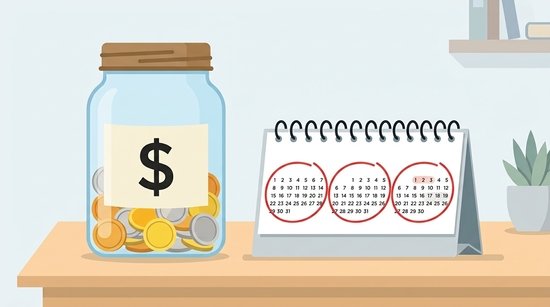
- Periodic expenses: costs that hit a few times a year, like car registration, holiday gifts, or annual subscriptions.
This structure works because your fixed expenses are the ones that must be covered by your baseline income, no exceptions. Flexible expenses get adjusted based on what actually came in that month. Periodic expenses get their own small monthly savings line, so a $400 car registration in October doesn’t blindside you.
Step 3: Pay Yourself a "Salary" From Your Business or Gig Income
One of the most effective shifts for irregular earners is to stop treating every deposit as spendable cash the moment it arrives. Instead, route all income into one account, then transfer a consistent, modest "paycheck" to your everyday spending account each week or month.
Because that paycheck is based on your baseline, not your best month, it stays steady even when your actual income doesn’t. Any extra sitting in the main account becomes a buffer for the next slow stretch — essentially, you’re smoothing out your own income before it ever reaches your budget.
Step 4: Build a Bigger Emergency Fund Than "Normal" Advice Suggests
Most general budgeting advice recommends three to six months of expenses in an emergency fund. If your income is irregular, that number often isn’t enough of a cushion.
Financial planners quoted by Investopedia point out that while stable, dual-income households might get by with three months of savings, self-employed people and others with higher income risk may need closer to a year’s worth of expenses set aside. That’s a big range, so don’t let it overwhelm you. Start with one month of expenses, then keep building during your stronger months rather than waiting until you feel "ready."
In my own experience, I’ve had to get comfortable adjusting my spending fast whenever income slows down, without letting quality of life take the full hit. That usually means shopping around for a better deal on something I already need, rather than just cutting it out entirely — it’s a habit that’s saved me more than once during a leaner stretch.
Step 5: Prioritize Bills the Same Way Every Time
When money is tight, decision fatigue makes everything harder. Set a fixed priority order in advance so you’re not renegotiating it every time a slow month hits:
- Housing and utilities
- Minimum debt payments
- Insurance
- Food
- Transportation needed for work
- Everything else
Because the order is already decided, a lean month becomes a matter of following the list, not a stressful negotiation with yourself.
Step 6: Review and Adjust Monthly, Not Yearly
An irregular income budget isn’t something you set once. Check in at the start of every month: How much came in? How much is sitting in your buffer? Does your baseline still hold, or has it shifted?
On the other hand, don’t over-correct after a single good or bad month. One strong month doesn’t mean you can raise your baseline permanently, and one slow month doesn’t mean the system is broken. Look at trends over a few months before making structural changes.
The Bottom Line
Budgeting on an irregular income takes more setup than a simple monthly spreadsheet, but it doesn’t require perfect predictions. Once your baseline, buffer, and priority list are in place, the system does the adjusting for you. If you’re building this out for the first time, it’s worth also looking at how a proper emergency fund fits into the bigger picture, since the two go hand in hand.
Frequently Asked Questions
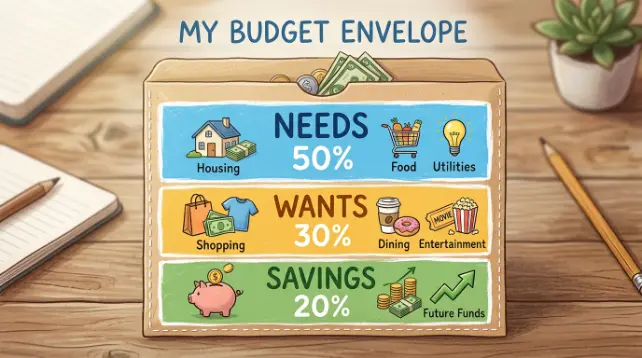
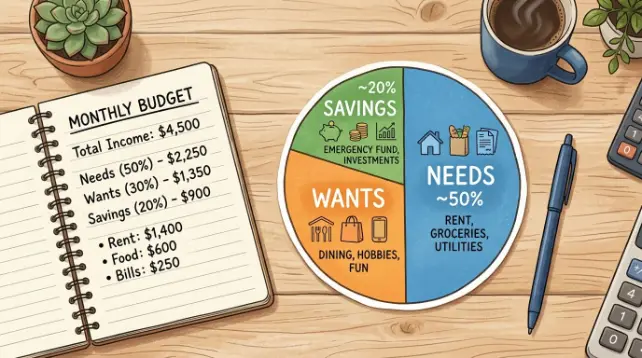
Is the 50/30/20 rule realistic for irregular income? Not directly. The 50/30/20 rule assumes a predictable paycheck, so it works better once you’ve built a baseline income and a buffer account. At that point, you can apply the percentages to your steady "paycheck" instead of your raw, fluctuating income.
How much should I keep in a buffer account if my income is irregular? There’s no single right number, but aiming for one to two months of your baseline expenses in your buffer account is a reasonable starting target before you focus on a separate, longer-term emergency fund.
What if my baseline month can’t cover my fixed expenses at all? That’s a signal to revisit your fixed expenses directly, not just your budgeting method. Look for costs you can renegotiate or temporarily cut, and consider whether a second income stream could raise your income floor.
Should I still contribute to retirement accounts with an irregular income? Yes, when possible, though the amount can flex with your income. Many irregular earners contribute a smaller fixed amount during lean periods and add lump sums during stronger ones instead of setting one fixed monthly amount.