You’ve probably tried to save money before and given up by week two. Life gets in the way, an unexpected expense shows up, and the whole plan falls apart. A 30-day challenge works differently: it’s short enough to stay motivated, but structured enough to build a habit that actually sticks.
This isn’t the old "save $1 more each day" jar challenge you’ve seen a hundred times. Instead, this version gives you one clear savings focus each week, so you’re not just stashing away spare change — you’re rewiring how you spend.
Why 30 Days Is the Right Length
Thirty days is long enough to notice a real pattern in your spending, but short enough that it doesn’t feel like a lifelong sacrifice. As a result, you’re far more likely to finish it than a challenge that stretches across three or six months.
There’s also a real financial gap this challenge can help close. According to a 2026 survey from Bankrate, 27% of U.S. adults currently have no emergency savings at all, the highest share the survey has ever recorded. In addition, U.S. News found that 43% of Americans couldn’t cover a $1,000 emergency expense from savings. A 30-day challenge won’t close that gap overnight, but it’s a realistic first step.
How the Challenge Works
Each week has a different focus. You’re not tracking 30 separate rules — just one habit shift per week, which makes the whole thing far easier to remember.
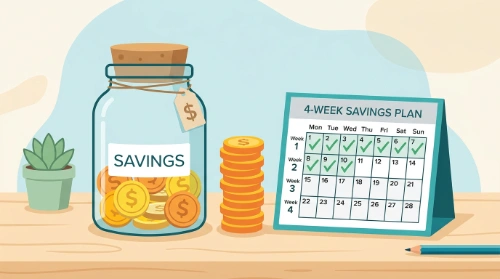
Week 1: Track Every Dollar Without Changing Anything
Before you cut anything, you need to see where your money actually goes. For seven days, write down every purchase, no matter how small.
- Use your phone’s notes app or a basic spreadsheet
- Include coffee, delivery fees, and small subscriptions
- Don’t judge the spending yet — just record it
Because most overspending happens in small, forgettable purchases, this step alone often reveals $50 to $150 a month in "invisible" spending that’s easy to redirect once you can see it.
Week 2: Cut One Category, Not Everything
Pick the single category from your Week 1 tracking that surprised you the most. Maybe it’s takeout, maybe it’s app subscriptions. Focus only on that one for the week.
Trying to overhaul your entire budget at once usually backfires, since it’s harder to sustain and easier to abandon after a bad day. Narrowing it to one category keeps the challenge manageable while still producing a noticeable result.
In my own experience, the biggest wins have never come from cutting everything at once. I’ve had to learn to compare my options carefully and trim spending where it actually makes sense, without settling for the cheapest choice just because it’s cheapest. That approach — targeted cuts instead of blanket restriction — is exactly what makes Week 2 sustainable instead of exhausting.
Week 3: Automate a Small, Fixed Transfer
During Week 3, set up an automatic transfer to a separate savings account — even if it’s just $10 or $20 per paycheck. The amount matters less than the habit of paying yourself before you spend.
Automating removes the decision-making step entirely, so you’re not relying on willpower every single week to remember to save. A high-yield savings account is worth considering here, since it lets your challenge money earn more than it would sitting in a standard checking account.
Week 4: Do a No-Spend Weekend Sprint
Close out the challenge with a full weekend where you spend nothing beyond essentials like groceries or gas. This isn’t meant to be permanent; it’s a short sprint to prove to yourself that a weekend without spending is possible, and often more enjoyable than expected.
Plan free activities in advance — a hike, a game night, a library visit — so you’re not tempted to spend simply out of boredom.
What to Do With the Money Afterward
Once the 30 days are up, decide where that saved money goes next instead of letting it quietly blend back into your checking account. Common options include:
- Building or topping off an emergency fund
- Paying down a small, specific debt balance
- Starting a sinking fund for a planned expense, like holiday gifts or car maintenance
The personal savings rate for U.S. households sits well below what most financial planners recommend, so directing this money with intention — rather than letting it disappear — is what actually turns a 30-day challenge into a lasting shift. [VERIFY: current U.S. personal savings rate percentage, likely source: U.S. Bureau of Economic Analysis]
Common Reasons This Challenge Fails (and How to Avoid Them)
Most people don’t fail because the challenge is too hard. They fail because of a few predictable traps:
- Starting during a high-expense week. If you know a big bill is due, wait a week before starting.
- Trying to change everything at once. Stick to one weekly focus, even if you feel motivated to do more.
- Not telling anyone. Sharing the challenge with a friend or partner adds light accountability without turning it into a competition.
- Treating a missed day as a failure. One off day doesn’t erase the other 29. Pick the challenge back up the next morning instead of restarting from scratch.
Frequently Asked Questions
How much money can I realistically save in 30 days? It depends heavily on your starting expenses, but many people save between $100 and $300 through a combination of tracking, one category cut, and a small automated transfer. The goal is building the habit, not hitting a specific number.
Do I need a separate bank account for this challenge? It’s not required, but it helps. Keeping challenge savings separate from your everyday checking account makes it much less tempting to spend the money before the 30 days are over.
What if I can’t finish all four weeks? Do the weeks that fit your situation, in any order. Even completing Week 1 and Week 3 — tracking spending and automating a small transfer — creates a real habit shift on its own.
Is this challenge only for people who are struggling financially? No. It works just as well as a reset for people who feel like their spending has quietly crept up over time, even if there’s no financial emergency involved.
You don’t need a perfect month to make this work — you just need four small shifts done consistently. If you’re not sure where to send the money you save, building out a proper emergency fund is usually the most useful next step.