
You open your banking app expecting to see your paycheck, and instead you see a $12 "maintenance fee" that quietly disappeared overnight. That single line item is exactly why so many people are ditching traditional checking accounts for ones that charge nothing at all.
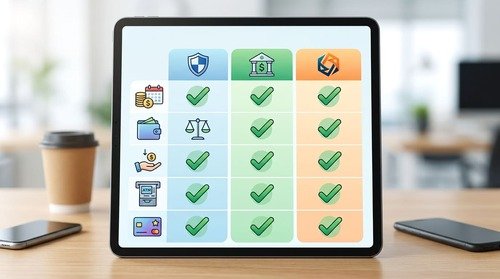
What "No-Fee" Actually Means
Not every account marketed as "free" really is. Some banks waive the monthly fee only if you keep a minimum balance or set up direct deposit — miss either one, and the fee kicks back in. A truly no-fee account skips those conditions entirely, charging $0 regardless of your balance or deposit habits.
The average monthly maintenance fee at U.S. banks recently climbed to a record $13.51, or more than $162 a year, though roughly a third of checking accounts now skip that fee altogether. On top of that, the average account holder loses close to $188 a year to fees when maintenance charges, overdraft penalties, and ATM surcharges are added together. Switching to a no-fee account is one of the simplest ways to keep that money in your own pocket instead. CNBCChime
Best No-Fee Checking Accounts Compared
| Bank | Monthly Fee | Minimum Balance | ATM Access | Overdraft Fees | Interest (APY) |
|---|---|---|---|---|---|
| Ally Bank (Spending Account) | $0 | $0 | 75,000+ fee-free ATMs, up to $10/cycle reimbursed | None | Yes |
| SoFi Checking | $0 | $0 | 55,000+ Allpoint ATMs | Up to $50 covered (with direct deposit) | Yes, 0.50% |
| Capital One 360 Checking | $0 | $0 | 70,000+ ATMs (Capital One, Allpoint, MoneyPass) | None | Yes, 0.10% |
| Axos Bank Rewards Checking | $0 | $0 | Unlimited domestic out-of-network reimbursement | Varies | Yes, tiered |
| Chime Checking | $0 | $0 | 50,000+ fee-free ATMs | None (SpotMe overdraft cushion) | No |
Rates and terms change often, so confirm current numbers directly on each bank’s site before opening an account.
Ally Bank: Best for ATM Reimbursements
Ally’s Spending Account requires no minimum deposit and charges no monthly or overdraft fees, while still paying interest on your balance. It also gives you access to a large fee-free ATM network and reimburses out-of-network charges up to a monthly cap, which matters if you travel or don’t live near an Ally-branded machine. Yahoo Finance
SoFi: Best for Early Pay and Overdraft Cushion
SoFi’s checking account earns 0.50% APY, a rate the company notes is several times the national average for interest-bearing checking, with no monthly fees, no minimum balance, and access to more than 55,000 Allpoint ATMs. Account holders who keep direct deposit active and a $1,000 balance also get overdraft coverage, so a small slip-up doesn’t turn into a declined transaction. wordpress
Capital One 360 Checking: Best for a Familiar Big-Bank Feel
Capital One 360 Checking pays 0.10% APY on every balance and comes with no opening deposit requirement, which is unusual for an account that also charges zero monthly fees. It also connects to a network of over 70,000 fee-free ATMs, including machines inside Target and CVS stores, so it works well for people who still want occasional in-person banking without giving up the no-fee structure. nerdwallet
Axos Bank Rewards Checking: Best for Frequent ATM Use
Axos Bank Rewards Checking charges no monthly maintenance fee and no minimum balance, and it reimburses unlimited domestic out-of-network ATM fees. That last part is rare — most banks cap reimbursements at a set dollar amount per month, so this is worth a look if you rely heavily on ATMs that aren’t in your bank’s network. Forbes
Chime: Best for Building a Cushion Without a Credit Check
Chime isn’t a traditional bank, but its checking account works the same way day-to-day: no monthly fees, no minimum balance, and a large fee-free ATM network. It’s a solid option if you’re rebuilding your banking history or want a simple account without earning interest as a priority.
How to Choose the Right No-Fee Account for You
Start with how you actually bank. If you deposit cash often, prioritize an account with strong in-person or cash-deposit access, like Capital One 360. If you rarely touch cash and want your balance to earn something, SoFi or Ally make more sense.
In my own experience cutting costs without losing what actually matters, I’ve learned that "free" isn’t the only thing worth comparing — the real savings show up when you line up ATM access, overdraft coverage, and interest side by side, since a $0 fee on an account with no reimbursements can end up costing more than a slightly less-hyped one. That habit of comparing the full picture, not just the headline number, is what usually points me to the option that actually fits.
Overdraft protection is another detail worth weighing carefully. Some accounts eliminate overdraft fees outright, while others offer a coverage cushion tied to conditions like maintaining direct deposit. Read the fine print here, because it’s often where a "free" account quietly reintroduces a fee.
Common Fees These Accounts Waive
- Monthly maintenance fees — the flat charge some banks apply just for keeping the account open.
- Minimum balance fees — penalties for dropping below a required balance.
- Overdraft fees — charges for spending more than your available balance.
- Out-of-network ATM fees — costs for using a machine outside your bank’s network.
Every account listed above waives the first two automatically. Overdraft and ATM policies vary more, so match those specifics to your own spending habits before choosing.
Frequently Asked Questions
Is a no-fee checking account actually safe to use?
Yes, as long as the bank is FDIC-insured (or NCUA-insured for credit unions), your deposits are protected up to $250,000 per depositor, per institution — the same protection as any traditional bank account.
Do no-fee checking accounts have any hidden costs?
Some charge for services like wire transfers, paper statements, or expedited card replacement. These are usually optional, but it’s worth checking the fee schedule before opening the account.
Can I switch to a no-fee account without losing my direct deposit?
Yes, but plan for a short overlap. Open the new account, update your direct deposit through your employer’s payroll system, and keep the old account open with a small buffer until the switch fully processes, which usually takes one to two pay cycles.
Do these accounts work well for someone who still wants a physical branch?
Capital One 360 is the strongest option here, since it pairs no-fee checking with actual branch locations and cafés in select cities. Fully online banks like Ally, SoFi, and Chime don’t offer branches at all.
Comparing accounts side by side like this makes it easier to spot which features actually matter for how you bank, rather than chasing whichever offer looks flashiest. If you’re also trying to figure out where to keep money you’re not spending right away, it’s worth looking at how a high-yield savings account stacks up against just leaving it in checking.