You’ve made the decision to get serious about your debt. Now comes the harder question: which app is actually going to help you stick with it, instead of becoming another abandoned download on your phone?

Debt payoff apps range from free calculators that just crunch numbers to full budgeting platforms that track every dollar you spend. The right one depends less on which app has the flashiest interface and more on how you actually think about money. Below is a practical comparison of four widely used options, based on what each one does well and where it falls short.
What to Look for Before You Pick One
Before comparing specific apps, it helps to know which features actually matter. Not every app needs every feature — it depends on how hands-on you want to be.
- Payoff method support. Does it calculate the debt snowball (smallest balance first), the debt avalanche (highest interest first), or both?
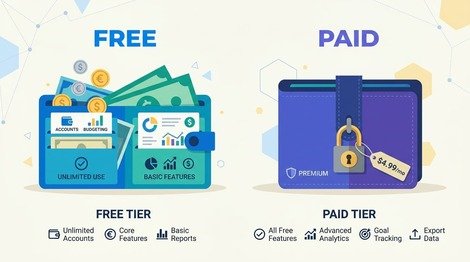
- Cost. Some tools are entirely free, others charge a small yearly fee, and a few are bundled inside a paid budgeting subscription.
- Budgeting integration. Do you want debt payoff tracked on its own, or connected to your full monthly budget?
- Manual entry vs. bank syncing. Manual entry gives you more control but takes more time; syncing saves time but requires linking your accounts.
- Motivation features. Visual progress bars, projected payoff dates, and interest-saved calculations can be the difference between quitting in month two and finishing the job.
How the Top Debt Payoff Apps Compare
| App | Price | Payoff Methods | Budgeting Integration | Best For |
|---|---|---|---|---|
| Undebt.it | Free (optional $10/year premium) | Snowball, avalanche, custom, plus 8 total methods | Basic bill tracking only | People who want full control without paying anything |
| YNAB (You Need A Budget) | Subscription-based | Works alongside any method you choose manually | Full zero-based budgeting | People who want debt payoff folded into total budget control |
| Debt Payoff Planner | One-time $1.99 | Snowball, avalanche, side-by-side scenario comparison | None (debt-focused only) | People who want a simple, one-purpose mobile app |
| Debt Free – Pay Off Your Debt | $0.99 | Snowball-style payoff tracking | None | People who want a lightweight, no-frills mobile tracker |
Undebt.it: The Free Option With Real Depth
Undebt.it is a browser-based tool that’s stayed free for over a decade, which is rare in this space. It supports eight different payoff methods, including the classic snowball and avalanche approaches, and lets you build a fully custom plan if neither fits how you think. You can export your entire payoff schedule to Excel, add one-time "debt snowflake" payments when extra cash comes in, and track unlimited debt accounts without hitting a paywall.
The optional Undebt.it+ upgrade, priced at $10 a year, adds extras like a debt consolidation simulator, calendar syncing, and automated reminders. However, none of those are required to actually build and follow a working payoff plan.
In my own experience, the temptation with money tools is always to grab the one with the most bells and whistles, even when a simpler option would do the job just as well. I’ve learned to compare what I actually need against what I’m being sold, and more than once that’s meant sticking with the free, no-frills version instead of paying for features I’d never touch.
YNAB: Best If You Want Debt Tied to Your Whole Budget
YNAB isn’t a dedicated debt payoff app — it’s a full budgeting system that happens to handle debt payoff well if you set it up that way. Every dollar you earn gets assigned a job, including a specific chunk aimed at extra debt payments each month. That structure works especially well for people whose debt problem is really a spending problem: you can’t fix one without seeing the other.
The tradeoff is cost. YNAB runs on a subscription, and unlike the other tools on this list, it asks you to build your entire budget inside it, not just your debt payoff plan. If you already have a budgeting system you like and just need debt tracking, this is more app than you need.
Debt Payoff Planner: Simple Scenario Comparisons on Mobile
Debt Payoff Planner is a one-time-purchase mobile app built specifically for comparing payoff strategies. You plug in your credit card and loan balances, and it shows you side-by-side projections for different approaches, including how much interest you’d save by paying a set amount extra each month. It also handles mortgage payoff scenarios, which most dedicated debt apps skip entirely.
Because it’s a standalone app with no budgeting features, it works best for people who already track spending elsewhere and just want a clear, visual answer to "how much faster could I be debt-free."
Debt Free – Pay Off Your Debt: Lightweight and Straightforward
This app keeps things simple: enter your debts, pick a payoff order, and track your progress as you go. It doesn’t try to be a budgeting tool or a financial planner, and that’s arguably its strength. For someone who finds feature-heavy apps overwhelming, a stripped-down tracker can be easier to actually open every week.
Which One Should You Choose?
If you want the most functionality for zero cost, start with Undebt.it. If your real problem is that money disappears before it reaches your debt payments, YNAB addresses that root cause even though it costs more. If you just want a clean visual of your payoff timeline without any budgeting commitment, either Debt Payoff Planner or Debt Free will do the job — the choice between those two mostly comes down to which interface you find easier to look at every day.
Whichever you pick, the tool only works if you actually check it. According to the Federal Reserve Bank of New York’s Q1 2026 household debt report, credit card balances stood at $1.25 trillion nationally, and total household debt reached $18.8 trillion by the second quarter of the year — a reminder that debt is a widespread, ongoing challenge, not a personal failing.
Frequently Asked Questions
Are debt payoff apps actually worth using instead of a spreadsheet? A spreadsheet can absolutely work if you’re comfortable building formulas and updating it consistently. Apps just automate that process and, in many cases, add visual motivation like progress bars and payoff-date projections that a static spreadsheet won’t show you.
Do I need a paid app, or is free good enough? Free tools like Undebt.it cover the core function — building and tracking a payoff plan — without cost. Paid options tend to add convenience features like bank syncing or budgeting integration, which matter more if you want everything in one place.
Is the debt snowball or the debt avalanche method better? The avalanche method saves more money in interest since you attack the highest-rate debt first. The snowball method, which targets the smallest balance first, tends to keep people motivated longer because of quicker visible wins. The "best" method is the one you’ll actually stick with.
Can these apps hurt my credit score if I link my accounts? Most budgeting and debt apps use read-only bank connections through services like Plaid, which don’t affect your credit score. If an app offers to open new credit or consolidation loans on your behalf, that’s a separate action worth evaluating on its own terms.
If you’re still building your very first budget before tackling debt, it might help to start there — getting a clear picture of where your money goes each month makes any payoff plan easier to stick to.