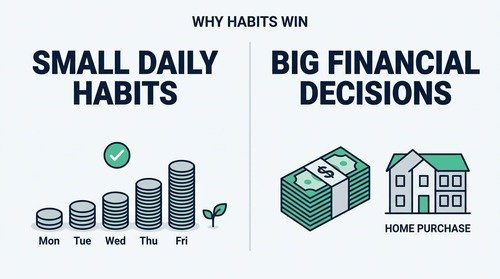

Most people quit their budget for the same reason they quit a crash diet: it feels like punishment. You cut everything at once, white-knuckle it for a few weeks, and then one bad day undoes the whole plan. Real financial discipline works differently — it’s built on systems you can actually live with, not rules you’re constantly fighting against.
Why Strict Budgets Usually Backfire
The instinct to "cut everything" comes from a good place, but it rarely survives contact with real life. Research published in the Journal of Consumer Research found that budget compliance is generally weak because people tend to set wildly optimistic budgets for themselves. In other words, the budget itself isn’t the problem — the unrealistic expectations behind it are.
Interestingly, the same research found something encouraging: even when people don’t fully stick to their budgets, having one still helps reduce spending, and the effect lasts for months. That’s worth sitting with. You don’t need a perfect budget to make progress. You need one you’ll actually keep using.
Discipline Is a System, Not a Sacrifice
Discipline gets a bad reputation because people confuse it with restriction. But the two aren’t the same thing. Restriction says "you can’t have this." Discipline says "here’s how I’ll get what matters most to me." One feels like a cage; the other feels like a plan.
In my own experience, I’ve never been the type to take on debt or rely on last-minute fixes — I’d rather figure out where I can trim spending without giving up quality. That mindset shift, from "what am I losing" to "what am I optimizing," changes how sustainable the whole process feels.
A few practical ways to build that mindset:
- Automate the boring parts. Set up automatic transfers to savings the day you get paid, so discipline doesn’t depend on willpower every single day.
- Budget for fun on purpose. A line item for entertainment or takeout isn’t a failure of discipline — it’s what keeps the plan realistic enough to follow.
- Compare before you cut. Instead of eliminating a category entirely, look for a version of it that costs less without sacrificing what you actually value.
- Review weekly, not daily. Checking your numbers once a day can turn into obsessive tracking. A weekly check-in is usually enough to stay on course.
The Data Backs Up the "Sustainable Over Strict" Approach
More people are budgeting than ever, which suggests the habit itself is catching on — even if perfection isn’t the goal. The share of Americans who say they create a monthly budget has grown from 39% in 2021 to 47% in 2026, according to Ramsey Solutions' State of Personal Finance study. That’s a meaningful shift, and it lines up with a broader trend: more households in 2026 are pivoting from "splurge at all costs" spending toward a more disciplined, strategic approach to saving, per MoneyLion’s 2026 budgeting data. kbew98countrymoneylion
None of this means everyone is nailing their budget every month. It means more people are building the habit, imperfectly, and sticking with it long enough for it to matter.
How to Build Discipline That Actually Sticks
1. Start with one category, not your whole budget.
Trying to overhaul every category at once is exhausting and usually short-lived. Pick the one that’s causing the most stress — often dining out or subscriptions — and focus there first.
2. Give every dollar a job, but leave room to breathe.
A zero-based approach can work well, but only if it includes a category for "flexible spending." Without that buffer, one unplanned purchase can feel like you’ve broken the whole system.
3. Track progress, not perfection.
Instead of measuring success by whether you hit every number exactly, measure it by whether you’re moving in the right direction month over month.
4. Reward yourself within the plan.
Discipline lasts longer when it includes small, planned rewards. A $20 "fun fund" built into the budget removes the temptation to blow past it.
5. Revisit and adjust every few months.
Your budget should evolve as your life does. A plan that felt restrictive six months ago might just need a few tweaks to feel workable again.
FAQ
Does financial discipline mean I can never spend on things I enjoy?
No. Sustainable discipline includes planned spending on things you value — it just means that spending is intentional rather than automatic.
How long does it take to build a financial habit that sticks?
Most people need a few months of consistent practice before a new money habit feels automatic rather than forced. Expect some adjustment along the way.
What’s the difference between budgeting and being restrictive?
Budgeting is about directing your money on purpose. Restriction is about cutting things out entirely, often without a plan for what happens when motivation runs out — which is usually why it doesn’t last.
Is it normal to feel guilty when I don’t stick to my budget perfectly?
Yes, but that guilt often isn’t productive. Research shows that even imperfect budgets tend to reduce spending over time, so an off month doesn’t erase your progress.
Financial discipline isn’t about tightening every screw until nothing moves — it’s about building a system flexible enough to survive a bad week without falling apart. If you’re just getting started, it might help to look at how a simple budgeting framework can give you that structure from day one.