You check your phone during a coffee break, and within thirty seconds you’ve seen a friend’s new car, a stranger’s vacation in Bali, and someone’s "clean girl" morning routine that apparently costs $200 a month in products. None of that was on your radar an hour ago. Now it’s all you can think about — and suddenly your own budget feels a little smaller than it did this morning.
That reaction has a name: comparison culture. And it’s quietly reshaping how millions of people spend, save, and feel about their money.
What Comparison Culture Actually Means for Your Wallet
Comparing yourself to others isn’t new. However, what’s changed is the volume and precision of what we’re comparing against. A generation ago, "keeping up with the Joneses" meant the neighbors next door. Today, it means an endless, algorithm-curated feed of vacations, renovations, and purchases from people you’ve never met.
As a result, your internal sense of "normal" spending gets recalibrated by content that was never meant to represent reality in the first place. Most people don’t post their credit card balance or their student loan payment — they post the trip, not the financing plan behind it.
How Comparing Yourself Financially Backfires
It Distorts What "Normal" Spending Looks Like
When your feed is full of new kitchens and weekend getaways, your brain quietly updates its idea of what an average life costs. Because of that shift, spending that once felt like a splurge can start to feel routine, even necessary.
Research backs this up. According to a Harris Poll conducted on behalf of Credit Karma, 48% of Gen Z and 40% of millennials say social media causes them to spend money they don’t have. That’s not a small side effect — it’s nearly half of an entire generation reporting that their feed is actively pushing them past their budget.
It Fuels Impulse and FOMO-Driven Purchases
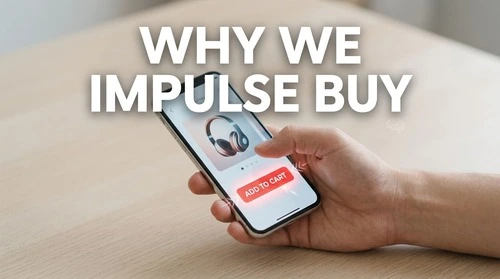
Comparison culture doesn’t just change what you want; it changes how quickly you act on it. Seeing someone else’s purchase in real time creates urgency that a store shelf never could.
A 2025 survey from Empower found that 57% of Americans have made a financial decision after seeing someone else’s lifestyle online, and 73% said financial FOMO changed how they spend, save, or invest. In other words, this isn’t an occasional slip — for most people, it’s a regular part of how money decisions get made.
It Can Quietly Erode Your Savings Goals
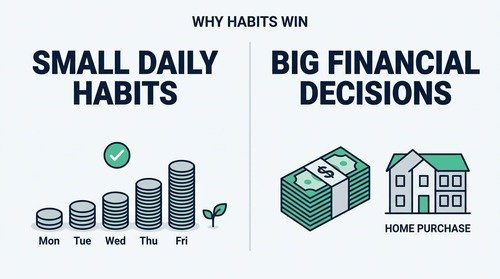
Individually, a comparison-driven purchase might seem harmless. But over months, those small "just this once" moments add up, and they tend to compete directly with savings goals that don’t offer the same instant gratification.
MassMutual has reported that 39% of Americans feel influenced to spend more when they see others doing so on social media. Because saving money produces no visible content to compare yourself against, it’s easy for it to lose out to spending that does.
Why Social Media Makes It Worse Than It Used to Be
Traditional comparison had natural limits — you could only see so much of your neighbors' lives. Social media removes almost all of those limits, replacing them with a curated highlight reel that runs 24 hours a day.

In my own experience, money has never been a purely practical thing — when things are going well financially, everything else feels lighter, and when they’re not, that stress bleeds into my mood and confidence in a way I don’t always see coming. I think that’s especially true for young men, where money gets tied up with self-worth in ways nobody really talks about openly. Comparison culture makes that worse, because it’s no longer just about what someone else has — it’s about how quickly that one glance at a screen can shift your whole outlook on the day.
That emotional pull is exactly why comparison-driven spending is so hard to catch in the moment. It doesn’t feel like a financial decision; it feels like keeping pace with your own life.
How to Break the Comparison Habit With Money
You can’t opt out of social media entirely, and you probably don’t want to. However, you can build a few habits that put distance between what you see online and what you actually do with your money.
- Name the trigger. Before buying something inspired by a post, pause and ask whether you wanted it an hour ago. If the answer is no, give it 24 hours before deciding.
- Mute the noise, not the people. Unfollowing isn’t necessary, but muting accounts that consistently trigger spending urges can meaningfully cut down on impulse decisions.
- Track your own numbers, not theirs. A simple monthly check-in on your savings rate or debt payoff progress gives you a real benchmark instead of a curated one.
- Reframe what you’re actually seeing. Remind yourself that a highlight reel is a highlight reel — not a full financial picture, and definitely not a competition you’re required to enter.
- Redirect the urge. When you feel that pull to spend, try transferring the same amount into savings instead. It satisfies the urge to "do something" without the financial cost.
None of these habits require willpower in the way people usually imagine. Instead, they work by reducing how often you’re exposed to the trigger in the first place, which makes the whole thing easier to manage over time.
Frequently Asked Questions
Is comparison culture the same thing as "keeping up with the Joneses"? They’re closely related, but comparison culture is broader and more constant. Keeping up with the Joneses usually referred to visible neighbors, while comparison culture is fed by an algorithm showing you curated content from strangers around the world, all day long.
Can taking a break from social media actually improve my finances? It can, at least indirectly. Reducing exposure to spending triggers tends to lower impulse purchases for many people, though the bigger long-term fix is building awareness of the pattern rather than relying on a temporary break.
Why do I feel worse about my finances after scrolling, even if nothing changed? That reaction is common. Seeing curated content resets your baseline for what feels "normal," so your own situation can suddenly feel worse by comparison, even though nothing about your actual finances changed.
Is it bad to compare finances with friends at all? Not necessarily. Talking openly with friends about real numbers, goals, and struggles is very different from passively absorbing a curated feed, and it can actually reduce the shame and secrecy that make money stress worse.
Comparison culture isn’t going away, and neither is the pull to measure your life against a feed that was never built to be accurate. What can change is how automatically you react to it. If you’re working on that awareness, it also pairs well with looking at the emotional side of spending more broadly — including the moments when stress, not comparison, is what’s driving your purchases.