You’ve probably told yourself that once you land a raise, pay off that one credit card, or finally make a "smart" investment, your money problems will sort themselves out. But for most people, financial stability doesn’t come from one big win. It comes from what you do on a random Tuesday when nobody’s watching.
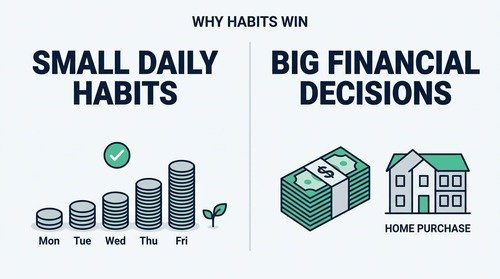
That’s not the answer people want to hear. A single decisive move feels more satisfying than checking your bank balance every morning or packing lunch for the tenth day in a row. However, research on behavior change backs up what quietly consistent savers already know: small, repeated actions shape outcomes more than occasional big ones.
The Habit Gap: Why One Big Decision Rarely Fixes Everything
Big financial decisions get all the attention because they’re dramatic. Refinancing a loan, negotiating a salary, or making a lump-sum debt payment feels like progress you can point to. But a single decision is a moment, not a system. Once the moment passes, your day-to-day behavior determines whether that progress holds.
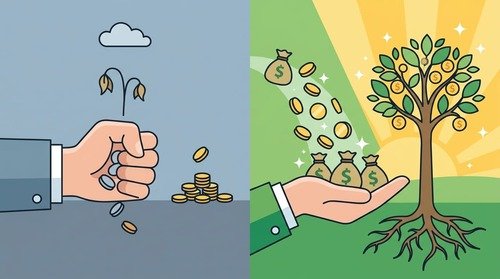
For example, someone who negotiates a $5,000 raise but keeps spending in step with their new income ends up in the same position as before, just at a higher number. On the other hand, someone earning less who consistently saves a small percentage every paycheck builds a cushion that compounds over time. The habit, not the headline number, does the heavy lifting.
Willpower Fades. Systems Don’t.
Big decisions often rely on motivation, and motivation is unreliable. It’s high on January 1st and low by February. Daily habits work differently because they eventually stop requiring willpower at all.
According to research from University College London, it takes an average of 66 days for a new behavior to become automatic, though the range varies widely depending on the person and the complexity of the habit. Once a habit crosses that threshold, you’re no longer relying on discipline. You’re relying on routine, which is far more durable.
How Small Financial Habits Add Up
None of this means big decisions don’t matter. Paying off a high-interest loan or switching to a better bank account can absolutely move the needle. The point is that these decisions work best when they’re supported by daily behavior, not treated as a one-time fix.
Here’s where small habits tend to have outsized effects:
- Checking your account balance daily. This alone reduces avoidance, which is one of the biggest drivers of financial stress.
- Automating a small, consistent transfer to savings. Even a modest amount builds a habit loop that’s easy to scale later.
- Reviewing one recurring expense each week. Small subscription or fee audits, repeated weekly, catch far more waste than a single annual review.
- Pausing before non-essential purchases. A short delay, practiced consistently, interrupts impulse spending patterns more effectively than a strict "no spending" rule that’s hard to sustain.
Each of these actions looks small in isolation. Repeated daily or weekly, they change the default behavior your finances run on.
Why Habits Matter More Than Willpower-Driven Decisions
Big financial decisions tend to happen under pressure: a crisis, a deadline, a moment of clarity after seeing a scary number. Habits, on the other hand, operate in the background regardless of your mood or motivation that day. That’s exactly why they’re more reliable.
In my own experience, money has never felt purely practical. When things are going well financially, everything feels lighter, but when they’re not, that stress creeps into my mood and even my sense of confidence. What’s helped more than any single decision has been building small, repeatable habits, like checking in on my spending regularly, instead of waiting for a crisis to force a big change. It’s made money feel less like an emotional rollercoaster and more like something I can steadily manage.
That kind of steadiness is hard to get from a one-time decision, no matter how smart it is. Habits create consistency, and consistency is what actually lowers financial anxiety over time.
Building Habits That Actually Stick
The mistake most people make is trying to overhaul everything at once, which usually collapses within a few weeks. Instead, focus on one habit at a time and make it small enough that skipping it feels harder than doing it.
Start with a single, specific action; for instance, transferring a fixed amount to savings every Friday. Once that becomes automatic, add the next habit. This mirrors what the UCL research found: consistency, not perfection, is what drives long-term change. Missing a day here and there doesn’t undo the habit as long as you get back to it.
FAQ
Do small daily habits really make a bigger difference than paying off debt faster?
Both matter, but they work at different levels. Paying off debt faster is a decision; sticking with a repayment plan every month is the habit that makes that decision effective long-term.
How long does it actually take to build a money habit?
Research suggests it takes roughly two months on average, though this varies by person and by how complex the habit is. Simple habits, like checking a balance daily, tend to form faster than more effortful ones.
What’s the easiest financial habit to start with?
Automating a small, fixed transfer to savings is usually the easiest starting point because it requires no ongoing decision-making once it’s set up.
Can changing small habits reduce financial stress?
Yes. Regularly checking in on your finances, even briefly, tends to reduce the avoidance and uncertainty that often drive money-related anxiety.
Financial progress rarely comes from a single dramatic moment. If you’re looking for a place to start, take a look at our guide on breaking the cycle of living paycheck to paycheck for a deeper dive into building habits that hold up over time.