You made a plan. You cut the extra spending, you set up the payments, and for the first month or two, it felt good. Then the excitement wore off, the balance barely seemed to move, and you started wondering if any of it was actually working. That dip is normal, and it’s usually where people quietly give up. Here’s how to keep going instead.
Why Motivation Fades Around Month Three
Debt payoff is a long game, but our brains are wired for short-term feedback. When a goal stretches over a year or more, the daily sacrifices stop feeling connected to the eventual payoff.
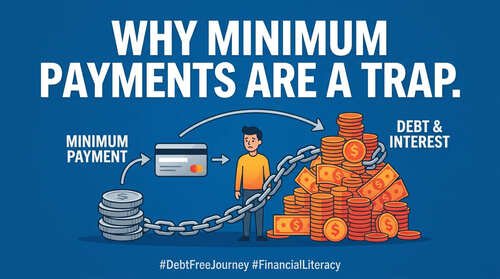
On top of that, standard minimum-payment math makes early progress look almost invisible. If most of your payment is going toward interest, watching the total balance barely shrink can feel discouraging, even when you’re doing everything right.
Understanding why the dip happens is the first step. The second is building a system that doesn’t depend on willpower alone.
Pick a Payoff Method Built Around Motivation, Not Just Math
The debt avalanche method (paying off your highest-interest debt first) saves you the most money in theory. But research on how people actually behave with multiple debts tells a different story.
A study published in the Journal of Marketing Research found that consumers consistently paid off their smallest debts first, even when a larger debt carried a higher interest rate, a pattern researchers call "debt account aversion." People aren’t purely rational about this. Closing an account, any account, delivers a psychological win that keeps them in the game.
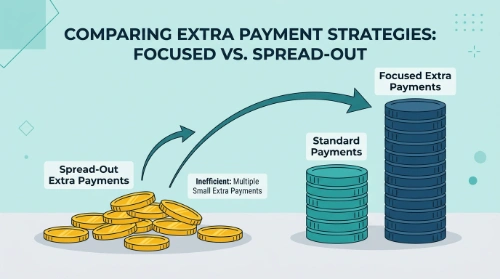
A separate study from the Journal of Consumer Research went further, finding that consumers who focused their extra payments on one account at a time (rather than spreading them across several debts) felt a stronger sense of progress, and that stronger sense of progress predicted whether they actually finished paying off their debt. This effect was strongest for people who tend to struggle with self-control around long-term goals, which, frankly, describes most of us at some point.
The takeaway isn’t that the avalanche method is wrong. It’s that if you know you need quick wins to stay engaged, the debt snowball (smallest balance first) may keep you in the fight longer than the "smarter" math would.
Break the Big Number Into Smaller Targets
A $14,000 debt is abstract. A $700 chunk you can knock out in two months is not.
Instead of fixating on your total balance, set milestones along the way:
- The first $500 paid off
- The first account fully closed
- Reaching the halfway point on your total debt
- The first month you pay less in interest than the month before
Each milestone becomes its own small finish line. As a result, you get more frequent proof that the plan is working, instead of one distant payoff date that’s hard to feel connected to.
Make Your Progress Visible
If your only record of progress is a number buried in a banking app, it’s easy to forget how far you’ve come. Visual tracking changes that.
A printable debt thermometer, a simple spreadsheet with a progress bar, or even a paper chart on your fridge all work. The format matters less than the fact that you can look at it and immediately see movement. Because progress that’s visible is progress that feels real, and progress that feels real is progress you’re more likely to keep chasing.
Build in Small, Planned Rewards
Debt payoff can start to feel like an endless list of things you’re not allowed to do. That mindset burns out fast.
Instead, plan small rewards tied to specific milestones. Paying off your first credit card might mean a nice dinner at home with a movie, not a $200 shopping trip. The reward should feel good without undoing the progress that earned it.
This isn’t about balance for its own sake. It’s about making the process sustainable enough that you actually reach the end of it.
Get Honest About the Numbers Around You
It helps to know you’re not the only one dealing with this. As of the first quarter of 2026, total U.S. credit card debt stood at roughly $1.25 trillion, with average balances per consumer sitting in the mid-$6,000s and average interest rates hovering around 22%. Carrying a balance in this environment isn’t a personal failing. It’s the reality most people are navigating right now, just often quietly.
In my own experience, I’ve always leaned toward being a saver rather than someone comfortable carrying debt. Part of that comes down to control: owing money to someone else means they have some say over your decisions, even indirectly, and that’s never sat well with me. That said, I don’t treat debt as something to fear entirely. I just prefer to stay within my means for now, and figure out how to use debt strategically later, on my own terms, rather than out of necessity.
What to Do When Motivation Completely Runs Out
Even with milestones and visible tracking, there will be weeks where you just don’t feel like sticking to the plan. When that happens:
- Revisit your "why." Write down the actual reason you’re doing this, whether it’s sleeping better at night or finally affording something specific, and reread it.
- Change one variable, not the whole plan. If the amount feels too aggressive, lower it slightly rather than abandoning the strategy altogether.
- Talk to someone. Saying your numbers out loud to a trusted friend or partner often makes the goal feel more real and less lonely.
- Look back, not just forward. Compare where you started to where you are now, instead of only measuring the distance still ahead.
Motivation isn’t something you either have or don’t. It’s something you rebuild, repeatedly, over the course of the whole process.
FAQ
How long does it typically take to pay off debt? It depends heavily on the total balance, interest rate, and how much extra you can put toward it each month. Many people budget for a payoff timeline of one to three years for credit card debt, though larger balances or lower monthly payments can extend that considerably.
Is the debt snowball method actually worse than the avalanche method? Mathematically, the avalanche method usually saves more in interest. Behaviorally, though, research shows the snowball method often leads to higher completion rates because of the motivational boost from closing accounts quickly. The best method is the one you’ll actually stick with.
What if I miss a payment while trying to stay motivated? One missed payment isn’t the end of your progress. Contact your lender if you can, get back on track with your next payment, and avoid the trap of treating one slip as a reason to give up on the whole plan.
Should I stop paying off debt if it feels overwhelming? Feeling overwhelmed is a signal to adjust your approach, not necessarily to stop. Consider lowering your monthly extra payment temporarily, revisiting your budget, or breaking your goal into smaller milestones so the plan feels manageable again.
Staying motivated isn’t about willpower that never runs out. It’s about building a system that keeps giving you reasons to keep going, even on the days you don’t feel like it. If you’re still deciding between payoff strategies, it might help to look at how the snowball and avalanche methods compare side by side before you lock in your plan.