You’ve cut back on takeout. You’ve stopped scrolling through sale emails. You’re sending extra money toward your balance every single month — and somehow the number barely moves. If that sounds familiar, the problem usually isn’t effort. It’s one of a handful of quiet mistakes that quietly cancel out the progress you’re making.
Here are the most common ones, and what to do instead.
Mistake #1: You Have a Goal, Not a Plan
"Pay off my debt" is a wish. It’s not a plan. Without a specific method, it’s easy to throw money at whichever balance feels most urgent that week, which wastes momentum and makes progress hard to see.
Two structured approaches solve this:
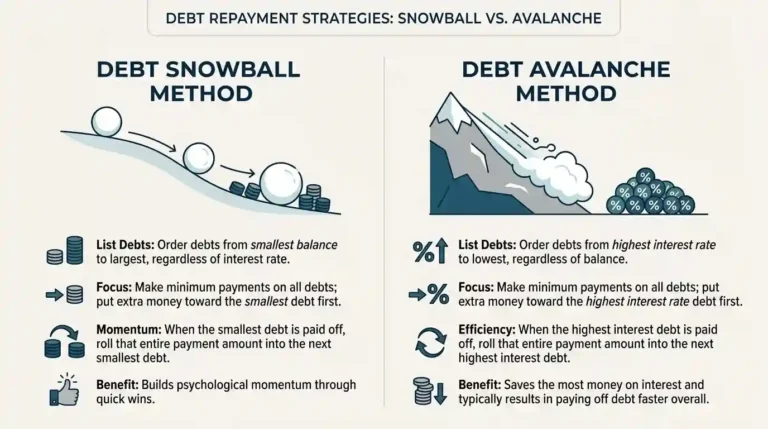
- Debt snowball: Pay minimums on everything, then put extra money toward your smallest balance first. Once it’s gone, roll that payment into the next smallest.
- Debt avalanche: Same structure, but you target the balance with the highest interest rate first, which saves more money mathematically.
The avalanche method wins on paper. However, behavioral research tells a more complicated story. A widely cited study published in the Journal of Marketing Research found that people are more likely to stay committed to debt payoff when they can close out individual accounts quickly, a pattern researchers call "debt account aversion." In other words, the small win of crossing an account off your list can matter more than a few extra dollars in interest.
If you’ve tried "just being disciplined" and it hasn’t stuck, the snowball method is worth trying. If you’re already consistent and motivated by numbers, the avalanche will save you more.
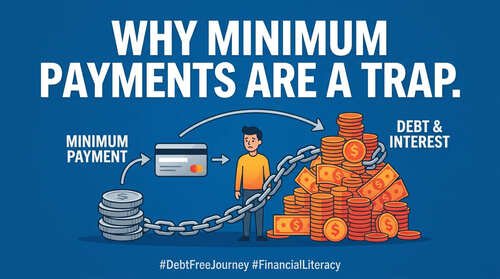
Mistake #2: Believing the Minimum Payment Is Progress
Minimum payments are designed to keep an account in good standing, not to get you out of debt. As of the second quarter of 2026, the average American credit card balance sat at $6,610, with the average interest rate on accounts carrying a balance at 21.52%. At that rate, sticking to minimum payments alone can stretch repayment out for years and add thousands of dollars in interest on top of what you originally borrowed.
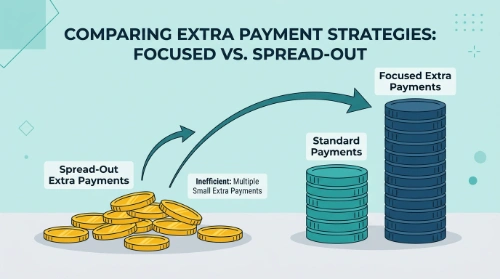
Even $20 or $50 extra per month, applied consistently to one target balance, changes that math significantly. What matters is that the extra amount is intentional and goes somewhere specific, rather than getting absorbed back into everyday spending.
Mistake #3: Attacking Debt With Zero Financial Cushion
It feels responsible to throw every spare dollar at debt. However, without any emergency savings, one car repair or medical bill often ends up right back on the credit card you just paid down, which can undo months of progress in a single swipe.
This isn’t a small edge case. According to a 2026 Bankrate survey, 44% of Americans say they have more emergency savings than credit card debt, while 29% say the opposite is true — meaning a large share of people are trying to pay down debt with no real buffer underneath them. Separately, a 2026 U.S. News survey found that 43% of Americans couldn’t cover a $1,000 emergency using savings alone.
A small buffer — even $500 to $1,000 — set aside before you go aggressive on debt tends to protect the progress you’re making, rather than slow it down.
In my own experience, avoiding debt altogether has always felt safer than managing it well. I’ve leaned on saving and living within my means instead of relying on credit, mostly because owing money to someone else can feel like handing them a bit of control over your decisions. That doesn’t mean debt is something to fear forever — used strategically, it can work in your favor down the line. But while you’re actively paying it off, reducing your dependence on it, even in small steps, tends to matter more than getting the math perfectly optimized.
Mistake #4: Closing Every Account the Moment It Hits Zero
Paying off a credit card feels like a finish line, so closing it seems like the obvious next step. However, doing this can quietly work against you. Closing a paid-off card reduces your total available credit, which can raise your credit utilization ratio on the cards you keep open. It can also shorten your average credit history length over time, since older accounts carry more weight than new ones.
Instead, consider keeping a paid-off card open (especially if it has no annual fee), using it occasionally for a small recurring charge, and paying that off in full each month. This keeps the account active without adding new debt.
Mistake #5: Never Revisiting Your Interest Rates
Many people set up their debt payoff plan once and never touch the interest rate side of it again. But a rate isn’t fixed just because you didn’t negotiate it. Options worth checking periodically include:
- Calling your card issuer to ask for a lower rate, especially if your credit score has improved since you opened the account
- Balance transfer cards with a 0% introductory period, which can pause interest entirely for 12–18 months if you qualify
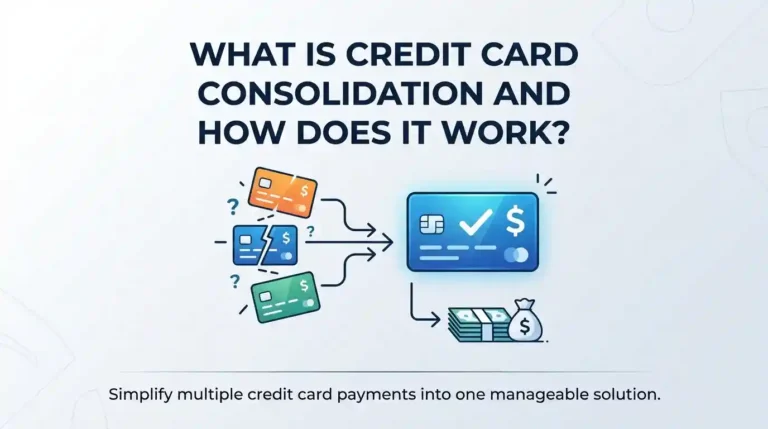
- Debt consolidation loans, which combine multiple balances into one fixed payment, often at a lower rate than credit cards
None of these are guaranteed to work for everyone, and balance transfer cards usually charge a transfer fee. Still, checking in on your rate once or twice a year costs nothing and can meaningfully shrink how much of your payment goes to interest instead of principal.
Mistake #6: Letting "Almost Debt-Free" Turn Into New Debt
This mistake tends to show up near the finish line. Progress starts to feel real, motivation dips slightly, and a "small" purchase gets put on a card "just this once." One purchase becomes a pattern, and the balance that was shrinking starts creeping back up.
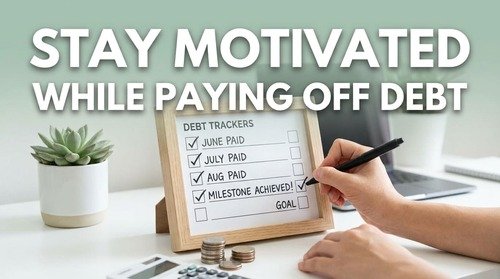
This isn’t a willpower failure so much as a predictable psychological pattern: motivation naturally fluctuates, especially once the initial urgency fades. Building in small, planned rewards along the way (a $20 treat for hitting a milestone, for example) tends to hold up better than white-knuckling it and hoping motivation stays constant.
Frequently Asked Questions
Should I save money or pay off debt first? For most people, a small starter emergency fund (around $500–$1,000) comes first, followed by aggressive debt payoff, then building a fuller emergency fund once high-interest debt is gone. The exception is employer-matched retirement contributions, which are often worth keeping even while paying down debt, since the match is essentially free money.
Is the debt snowball a bad idea because it ignores interest rates? Not necessarily. It costs more in interest, but if it’s the difference between finishing your payoff plan and abandoning it halfway through, the behavioral advantage often outweighs the extra cost.
Will paying off debt hurt my credit score? Usually not, and it typically helps over time by lowering your credit utilization. A small, temporary dip can happen right after closing an account, which is one more reason to think twice before closing paid-off cards immediately.
How long does it realistically take to pay off credit card debt? It depends heavily on your balance, interest rate, and how much extra you can pay each month. Rather than aiming for a specific timeline, focus on making your monthly extra payment consistent — that’s the variable you actually control.
Getting out of debt rarely comes down to one big decision. It’s usually a handful of small, unglamorous choices, repeated for longer than feels comfortable. If you’ve made one or two of these mistakes already, that’s not a reason to start over — it’s just information you can use to adjust course. If you’re still deciding which payoff method fits how your brain works, that’s worth figuring out next.