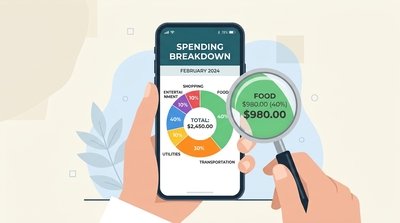
Most people don’t overspend because they’re bad with money. They overspend because they genuinely don’t know where the money went until the bank balance tells them. A free spending tracker fixes that blind spot without asking you to pay for the privilege of seeing your own transactions.
The good news: you don’t need a $15-a-month subscription to get this visibility. Several apps do a solid job for $0, as long as you know which one fits how you actually think about money.
Why "Free" Doesn’t Always Mean Free
Plenty of expense trackers advertise themselves as free, then lock bank syncing, reports, or category customization behind a paywall after the first week. What’s left is closer to a demo than a real tool.
Before picking anything, it helps to know what a genuinely free tier includes:
- Automatic or manual transaction tracking
- Spending broken down by category
- Some way to set a budget or spending limit
- No forced trial-to-paid conversion
With that filter in place, here’s how the strongest free options actually compare.
Best Free Tools to Track Your Spending, Compared
| Tool | Best For | Bank Syncing | Standout Feature |
|---|---|---|---|
| Rocket Money | Overall free tracking | Yes | Subscription tracking + spending categories |
| Empower | Tracking spending and investments together | Yes | Combines cash flow with net worth |
| Goodbudget | Manual, envelope-style budgeting | No (manual entry) | 20 free envelopes, syncs across 2 devices |
| NerdWallet | Spending + credit monitoring | Yes | Free credit score tracking included |
| PocketGuard | Seeing what’s safe to spend | Yes (free tier limited) | "In My Pocket" leftover-spending number |
Rocket Money — Best Overall Free Option
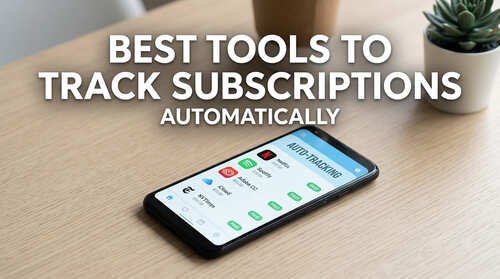
Rocket Money’s free tier includes basic budgeting tools, subscription tracking, and limited spending categorization at no cost. That subscription-tracking piece is worth calling out on its own — it’s genuinely useful for catching the $12 app renewal you forgot about in March. The Penny Hoarder
Best for: Someone who wants automatic tracking without digging through a spreadsheet.
Empower — Best for Tracking Spending and Net Worth Together
If part of your financial picture includes a retirement account or a brokerage account, Empower is worth a look. Empower is the only free app that combines spending tracking with investment monitoring, so if you have a retirement account or a stock portfolio, it shows everything in one dashboard. CentsForward
Best for: Anyone past the "just track my checking account" stage.
Goodbudget — Best for Manual, Envelope-Style Tracking
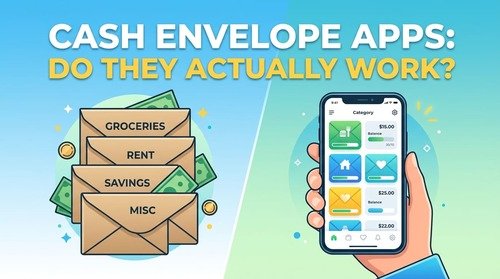
Goodbudget skips bank syncing entirely and asks you to assign every dollar to a digital "envelope" yourself. The free tier includes 20 envelopes and syncs across two devices, which makes it a solid option for couples splitting a budget together. The Penny Hoarder
That extra manual step is a feature, not a limitation, for a specific kind of person.
In my own experience, I’ve always leaned toward comparing every option carefully before committing money to anything — even a $0 app still costs you setup time and habit-building. When my income has tightened, the tools that stuck were the ones that let me see exactly where I could trim without feeling like I was cutting corners on quality. That’s really what a good free tracker should do: show you the trims that don’t hurt, not just the total damage.
NerdWallet — Best Free App With Credit Monitoring Built In
NerdWallet’s free app connects your accounts, tracks spending in real time, and monitors your credit score, all without charging anything. The spending reports aren’t as detailed as some competitors, but getting credit monitoring bundled in at no cost is hard to match. CentsForward
Best for: People who want one app for both spending and credit health.
PocketGuard — Best for Knowing What’s Safe to Spend
PocketGuard’s core idea is simple: after bills, goals, and necessities are accounted for, it shows you the number that’s actually safe to spend. PocketGuard organizes recurring bills so you always know what’s ahead, and its subscription manager lets you track and cancel unwanted subscriptions. Some of the newer features are limited to paid plans, but the core "leftover spending" view stays free. NerdWallet
Best for: Impulse spenders who need a hard number, not just a category breakdown.
What About Mint Replacements?
If you’re still looking for something to fill the gap Mint left behind, know that you’re not alone. [VERIFY: exact date Mint fully shut down — sources vary between "early 2024″ and "March 2024," confirm before publishing]. Both NerdWallet and Empower are commonly cited as the closest free replacements, since they combine the same automatic categorization Mint was known for.
How to Actually Pick One
Rather than downloading all five, match the tool to the actual problem you’re solving:
- Want the least effort? Go with Rocket Money or NerdWallet — both sync automatically.
- Want full manual control and awareness? Goodbudget forces you to look at every dollar.
- Have investments to track too? Empower is the only one built for that.
- Keep overspending on things that don’t matter? PocketGuard’s leftover-spending number is the most direct nudge.
FAQ
Are these apps actually free, or is there a hidden catch?
Each of the apps listed above has a permanent free tier — not just a free trial. Some, like PocketGuard, offer a paid upgrade with extra features, but the core spending-tracking function stays free indefinitely.
Do I need to link my bank account to track spending?
No. Goodbudget works entirely through manual entry, which some people actually prefer because it builds more awareness of each purchase.
Which free app is best for couples?
Goodbudget is the most commonly recommended option for couples, since its free tier syncs across two devices, letting both partners see and update the same budget. The Penny Hoarder
Will a free tracker actually help me save more money?
A tracker alone doesn’t save you money — it just shows you where the money is going. What you do with that information is what actually moves the needle.
If you’re just getting your spending patterns figured out, it might be worth pairing this with a simple monthly budget next.