You’re staring at four different credit card statements, four due dates, and four interest rates that all seem to climb every time you check. At some point, the question isn’t "how do I pay this off" — it’s "how do I stop juggling all of it at once." That’s the exact problem credit card consolidation is designed to solve.
What Credit Card Consolidation Actually Means
Credit card consolidation means combining multiple credit card balances into a single payment — usually through a new loan or a new card — so you’re dealing with one due date and, ideally, one lower interest rate instead of several high ones. It doesn’t erase what you owe. It reorganizes it, which is a meaningful distinction the Consumer Financial Protection Bureau is careful to point out to consumers considering this route.
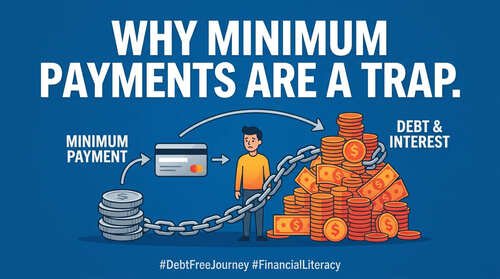
The appeal is easy to understand. The average interest rate on credit card accounts that carry a balance has been sitting above 22% in 2026. At that rate, a chunk of every payment you make goes straight to interest instead of your actual balance. Consolidation aims to lower that rate, or at least simplify the chaos, so more of your money goes toward the debt itself.
How Credit Card Consolidation Works
There isn’t one single method — there are several, and they work in fairly different ways.
Personal Loan (Debt Consolidation Loan)
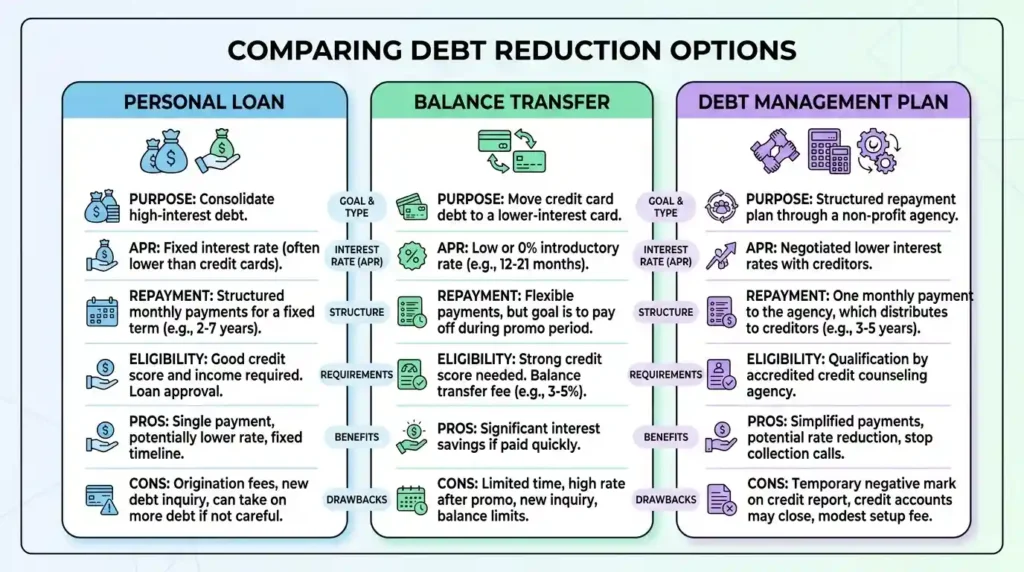
This is the most common route. You take out a fixed-term personal loan, use it to pay off your credit cards in full, and then make one fixed monthly payment to the loan instead. Because personal loans are installment loans rather than revolving credit, your payment and payoff date stay predictable.
The math only works if your new rate is meaningfully lower than what you’re currently paying. As of August 2026, average personal loan rates for borrowers with decent credit have generally landed somewhere in the 12% to 17% range, according to Bankrate and WalletHub — well below the 22%+ average on credit cards. Borrowers with excellent credit can sometimes qualify for single-digit rates, while those with weaker credit may be offered rates close to what they’re already paying on their cards, which erases the benefit.
Balance Transfer Card
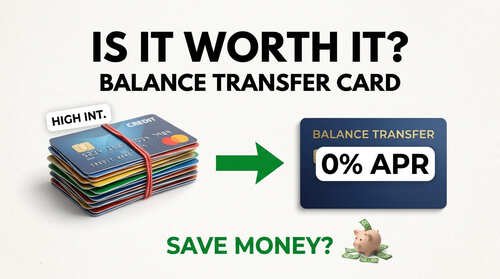
A balance transfer card lets you move existing balances onto a new card, often with a 0% introductory APR for a set window — commonly somewhere around 11 to 12 months. If you can realistically pay off the transferred balance before that promotional period ends, this can be the cheapest option available, since you’re paying no interest at all during that window. The catch is the transfer fee (typically 3% to 5% of the balance) and the fact that the rate jumps back up to a standard, often high, APR once the promo period ends.
Debt Management Plan
This isn’t a loan at all. You work with a nonprofit credit counseling organization, which negotiates with your creditors on your behalf — sometimes securing a lower interest rate — and you make one monthly payment to the counseling agency, which distributes it to your creditors. The CFPB notes that credit counselors typically don’t reduce what you owe, but they may lower your rate or stretch your payments over a longer period to make them more manageable. You can find accredited nonprofit counselors through the National Foundation for Credit Counseling.
Home Equity Loan or HELOC
If you own a home, you may be able to borrow against your equity at a lower rate than an unsecured loan. This is worth mentioning because it exists, but it comes with a serious trade-off: your home becomes the collateral. If you can’t keep up with payments, you risk losing it over debt that started out unsecured. This route deserves extra caution and isn’t something to decide on quickly.
| Method | Typical Rate Range | Best For | Main Risk |
|---|---|---|---|
| Personal loan | ~12%–17% (lower for excellent credit) | Predictable payoff timeline, fixed payment | Rate may not beat your cards if credit is weak |
| Balance transfer card | 0% intro, then standard APR after | Balances you can pay off within the promo window | Transfer fees; high APR once intro period ends |
| Debt management plan | Negotiated by counselor | Feeling overwhelmed, need structure and support | Some creditors may not participate; accounts often close |
| Home equity loan/HELOC | Often lower than unsecured options | Homeowners with strong equity and stable income | Your home is collateral |
In my own experience, I’ve generally avoided taking on debt, because I’d rather rely on my own money than owe something to an institution that then has some pull over my decisions. That doesn’t mean debt is never useful — a well-chosen consolidation loan can genuinely save money and reduce stress when the math works in your favor. But I’ve learned to ask first whether I can close the gap by adjusting spending before I commit to something new, and only reach for a loan once I’m confident it’s actually the better option, not just the easier one.
When Consolidation Actually Saves You Money
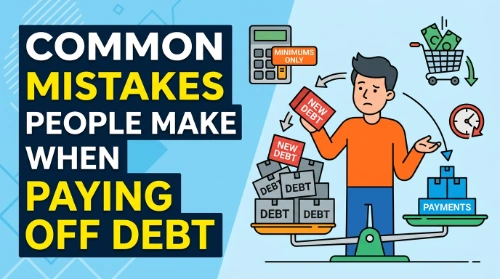
Consolidation makes sense when three things line up: your new rate is meaningfully lower than your current average card rate (several percentage points, not a fraction of one), you can comfortably afford the new fixed payment, and — this is the part people skip — you stop using the credit cards you just paid off. Without that last piece, it’s easy to end up with the new loan payment and fresh balances building back up on the cards, which leaves you worse off than before.
Common Mistakes to Avoid
- Consolidating without a spending change. If overspending caused the debt, a new loan without a budget adjustment just delays the problem.
- Ignoring fees. Origination fees on personal loans and transfer fees on balance transfer cards can eat into your savings — always calculate the total cost, not just the interest rate.
- Ignoring the true APR after fees. A rate can look attractive until fees are added in and the effective cost rises. The Experian debt consolidation guide walks through how origination fees change your real cost of borrowing.
- Keeping cards open and using them. Paying off a card doesn’t mean the temptation disappears — many people find it easier to keep the account open for credit history purposes but avoid using it.
- Working with the wrong company. The FTC warns that legitimate options exist, but some for-profit debt settlement companies charge high fees and encourage you to stop paying creditors altogether, which can do real damage to your credit.
FAQ
Does credit card consolidation hurt my credit score? It can cause a short-term dip, especially from a hard credit inquiry when applying for a loan or card, and from closing old accounts. Over time, making consistent payments on the consolidated debt and lowering your credit utilization typically helps your score recover and improve.
Is a debt consolidation loan the same as debt settlement? No. A consolidation loan pays off your full balances and replaces them with a new loan. Debt settlement involves negotiating to pay less than you owe, often after falling behind on payments, and it can seriously damage your credit in the process.
How much debt do I need to have before consolidation makes sense? There’s no fixed threshold. It’s less about the dollar amount and more about whether you’re juggling multiple high-interest balances and could realistically qualify for a lower combined rate.
Can I consolidate credit card debt with bad credit? It’s harder, but not impossible. Options tend to be more limited and rates less favorable, which is where nonprofit credit counseling and a debt management plan often become the more realistic path.
Sorting out which method actually fits your situation usually comes down to your credit profile and how disciplined you can be once the balances are cleared — not just which option has the lowest advertised rate.