You know the balance. You’ve probably even calculated the minimum payment in your head more than once. What most people don’t have is a plan — a real, written-down sequence of steps that turns "I need to pay this off" into "here’s exactly how, and here’s when it ends."
That gap is where debt lingers for years longer than it needs to. A debt payoff plan isn’t complicated, but it does need structure. Here’s how to build one from scratch, even if you’re starting with nothing but a stack of statements and a general sense of dread.
Why a Written Plan Beats "Just Paying It Off"
Most people don’t fail at debt payoff because they lack willpower. They fail because they never turned "pay off debt" into a concrete plan with numbers attached. Without a plan, extra money tends to get split thin across every balance, or disappears into spending before it ever reaches a lender.
The math backs this up: total U.S. credit card debt reached roughly $1.25 trillion in the first quarter of 2026, and the average American carried about $6,715 in card balances as of the end of 2025. Average interest rates on credit cards are sitting close to 22%, which means debt left on autopilot — with no strategy behind it — keeps growing even while you’re making payments.
A written plan flips that. It tells every dollar where to go before you get the chance to second-guess it.
Step 1: List Every Debt You Owe
Before you can build a plan, you need the full picture. Pull up every account — credit cards, personal loans, medical bills, buy-now-pay-later balances, that loan from a family member you keep meaning to pay back.
For each one, write down:
- The current balance
- The minimum monthly payment
- The interest rate (APR)
- The due date
Put it all in one place — a notes app, a spreadsheet, even a piece of paper taped to the fridge. The goal is to stop each debt from living in a separate mental compartment and start seeing them as one combined problem with one combined solution.
In my own experience, I’ve never been comfortable carrying debt — I’d rather rely on what I actually have than owe someone else money, because debt has a way of putting other people in control of your decisions. That’s part of why this step matters so much: seeing every balance in one list, instead of avoiding the ones that feel too uncomfortable to look at, is what makes a debt payoff plan feel possible instead of overwhelming.
Step 2: Choose Your Payoff Method
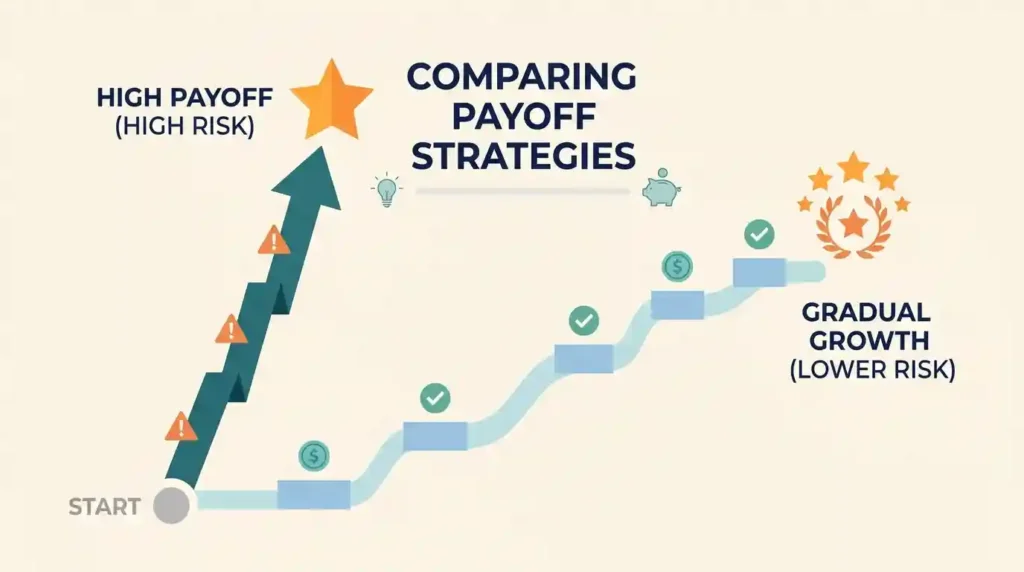
Once you can see everything you owe, you need a strategy for the order you’ll attack it in. The two most common methods work differently, and the "best" one depends on what actually keeps you motivated.
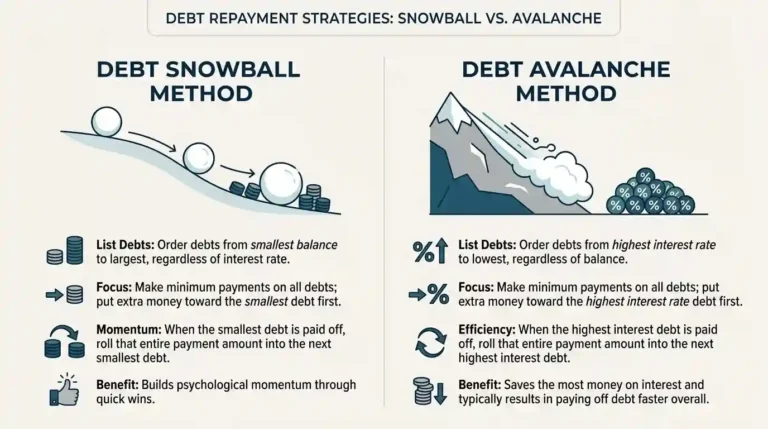
| Method | How It Works | Best For |
|---|---|---|
| Debt Snowball | Pay off the smallest balance first, regardless of interest rate, then roll that payment into the next-smallest debt | People who need quick wins to stay motivated |
| Debt Avalanche | Pay off the highest-interest debt first, then move to the next-highest rate | People who want to minimize total interest paid over time |
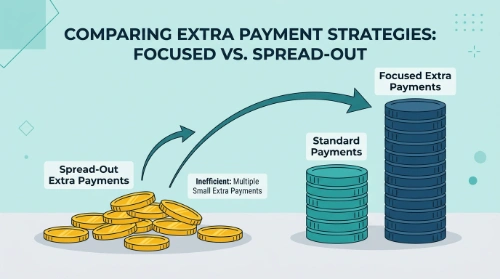
Both methods use the same core mechanic: you pay minimums on everything, then throw every extra dollar at one target debt until it’s gone. The difference is only in which debt you target first.
If you’ve started and abandoned debt payoff plans before because you lost steam, the snowball method’s early wins tend to matter more than the math. If you’re disciplined about sticking with a plan even when progress feels slow, the avalanche method will save you more money in interest.
Step 3: Find Extra Money to Put Toward Debt
Minimum payments alone can keep you in debt for years, especially on high-interest balances. The plan only moves faster with extra payments, so this step is about finding that extra money — realistically, not aspirationally.
A few places to look:
- Audit recurring subscriptions you’re not using regularly
- Redirect a windfall — tax refund, bonus, cash gift — straight to your target debt instead of spending it
- Pick up a short-term side income dedicated entirely to debt, separate from your regular budget
- Cut one category temporarily, like dining out, and route the savings directly to your payoff plan
The key is to treat this extra money as already spoken for. The moment it lands in your account, it goes to the debt — it doesn’t sit in checking waiting to get absorbed into everyday spending.
Step 4: Automate What You Can
Plans fail more often from inconsistency than from bad math. Automating your minimum payments across all accounts removes the risk of a missed payment derailing your progress — and missed payments are expensive, since they often trigger penalty APRs on top of the interest you’re already paying.
Set up:
- Autopay for at least the minimum on every account
- A recurring automatic transfer for your extra "target debt" payment, timed to right after payday
- A calendar reminder to review your full debt list once a month
Automation doesn’t replace the plan — it protects it from the weeks when life gets busy and good intentions aren’t enough.
Step 5: Track Progress and Adjust as You Go
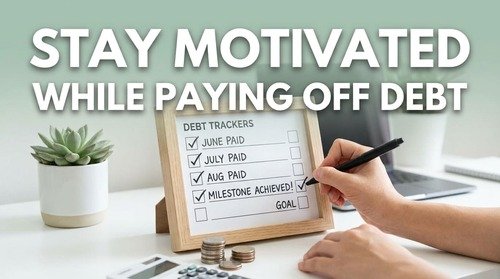
A debt payoff plan isn’t something you set once and forget. Update your debt list every month with new balances, and recalculate your payoff timeline as balances shrink. Seeing the total number drop, even slowly, is what keeps most people going.
If your income or expenses change, adjust the plan rather than abandoning it. A smaller extra payment during a tight month is still progress — it’s the total abandonment of the plan, not a temporary slowdown, that usually causes debt to creep back up.
Frequently Asked Questions
How long does it usually take to pay off credit card debt? It depends entirely on the balance, interest rate, and how much extra you can pay each month beyond the minimum. Someone paying only minimums on a high-interest balance can take a decade or more, while an aggressive extra-payment plan can cut that down to a year or two.
Should I stop using my credit cards while paying off debt? Most people find it easier to pay off existing balances if they pause new charges on cards being targeted in the plan. Otherwise, new spending can offset the progress you’re making on the balance.
What if I have debt with a family member or friend, not just a bank? Include it on your list the same as any other debt. It won’t show up on a credit report, but it still affects your monthly cash flow and, often, your relationships — both good reasons to prioritize it in your plan.
Is it better to pay off debt or build savings first? Most financial educators recommend a small starter emergency fund — enough to cover a minor unexpected expense — before going all-in on debt payoff. Otherwise, the next surprise bill just becomes new debt.
Once your plan is on paper and your first automatic payment is scheduled, the hardest part is behind you — the rest is just letting the plan run.