You walked across the stage, packed up your dorm room, and now there’s a real paycheck showing up in your bank account. Nobody handed you an instruction manual for what to do with it. Between rent, student loans, and the temptation to finally buy nice things after four years of ramen, the first year out of college is where financial habits get set — for better or worse.
This guide walks through the money moves that actually matter right now, in the order you’ll likely need them.
Get Real About Your Take-Home Pay
Your salary and your paycheck are two very different numbers. Taxes, health insurance premiums, and any retirement contributions come out before the money ever reaches your account, so the first step is figuring out what you actually have to work with each month.
The overall average starting salary for the Class of 2026 rose to about $68,873, according to the National Association of Colleges and Employers — but that figure varies enormously by major and region, and it’s a gross number, not what lands in your checking account.
A quick way to get oriented:
- Pull up your first pay stub and note the actual deposit amount, not the salary you were offered
- Multiply that by the number of paychecks you get per month
- That number — not your annual salary divided by 12 — is your real starting point for a budget
Build a Bare-Bones Budget Before You Do Anything Else
You don’t need a complicated spreadsheet in your first month. You need to know three things: what’s coming in, what’s fixed (rent, phone, insurance, minimum loan payments), and what’s left over.
Try the 50/30/20 split as a starting point

A common framework is putting roughly 50% of take-home pay toward needs, 30% toward wants, and 20% toward savings and debt payoff beyond the minimums. It won’t fit everyone’s situation — especially in a high cost-of-living city — but it’s a useful gut check for whether your fixed costs are eating too much of your paycheck.
Watch for lifestyle inflation
The jump from a student budget to a real income creates an urge to upgrade everything at once: a bigger apartment, a newer car, dinners out several nights a week. None of that is wrong, but doing it all in month one, before you’ve built any cushion, is how people end up living paycheck to paycheck despite earning more than they ever have.
Start (or Finish) Your Emergency Fund
An emergency fund is the difference between a car repair being an inconvenience and it becoming a credit card balance you’re still paying off a year later. Most financial educators recommend starting with a smaller goal — often cited as $500 to $1,000 — before working up to three to six months of expenses.
In my own experience, the hardest part of managing money hasn’t been earning more — it’s been adjusting spending when things get tight without giving up on the things that actually matter to me. I’ve learned to treat comparison shopping and small trims as a habit rather than a last resort, which makes it much less painful when income dips or an unexpected cost shows up.
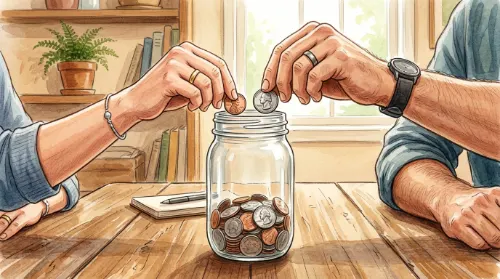
If a full emergency fund feels out of reach right now, even $25 a paycheck moved automatically into a separate savings account builds the habit before you have the cash to make it substantial.
Make a Plan for Student Loans
If you graduated with loans, you’re not alone. The average undergraduate borrower now carries around $29,550 in federal student loan debt, according to the Education Data Initiative — though your actual balance may be higher or lower depending on your school and program.
Know your grace period
Most federal loans give you a six-month grace period after graduation before payments start. That window is for building your budget and emergency fund — not for ignoring the loans exist.
Understand your repayment options
Federal loans typically offer several repayment paths, including standard fixed payments and income-driven plans that adjust based on what you earn. Before your first payment is due, log into your loan servicer’s portal and compare what each option would actually cost you monthly and over time.
Don’t confuse "minimum payment" with "smart payment"
Paying only the minimum keeps you in good standing, but if you have any extra room in your budget, even small additional payments toward the loan with the highest interest rate can meaningfully shorten how long you’re paying it off.
Don’t Skip Retirement Savings, Even at 22
Retirement feels abstract when you’re focused on this month’s rent, but time is the one advantage you have right now that only shrinks. If your employer offers a 401(k) match, that’s money that disappears if you don’t claim it. The average employer match currently sits around 4% to 5% of salary, according to Fidelity — meaning your employer effectively gives you a raise just for contributing enough to capture it.
A reasonable starting sequence:
- Contribute at least enough to get your full employer match, if one is offered
- Build your starter emergency fund alongside it, not after it
- Increase your contribution percentage each time you get a raise, before your spending catches up to the new income
Start Building Credit Intentionally
Your credit history probably started in college, but your first year of steady income is when it either strengthens or gets damaged. A thin or shaky credit file can affect your ability to rent an apartment, finance a car, or even get approved for a phone plan without a deposit.
- Pay every bill on time, including subscriptions and phone bills that can sometimes report to credit bureaus
- Keep credit card balances low relative to your limit, even if you pay in full each month
- Avoid opening several new credit accounts in a short window, which can temporarily lower your score
Common First-Year Money Mistakes to Watch For
- Signing a lease you can’t comfortably afford because it "seemed fine" based on gross salary, not take-home pay
- Ignoring workplace benefits like HSAs, commuter benefits, or tuition reimbursement that quietly save real money
- Financing a car you don’t need yet, especially before you know your actual commute or cost of living in a new city
- Letting subscriptions pile up from trials you forgot to cancel during the busy final months of school
Frequently Asked Questions
How much should a recent college graduate have saved before moving out? There’s no single number, but most guidance suggests having at least one month of rent plus a small buffer (often cited as $500–$1,000) before signing a lease, so an unexpected expense doesn’t immediately put you behind.
Should I pay off student loans or save for retirement first? Many financial educators suggest doing both in parallel: contribute enough to get any employer 401(k) match, cover minimum loan payments, and build a small emergency cushion — then decide how to split any extra money between extra loan payments and additional retirement savings based on your loan’s interest rate.
Is it bad to use credit cards as a new graduate? Not inherently — using a credit card responsibly (small purchases, paid in full monthly) is one of the more effective ways to build credit history. The risk is carrying a balance, which adds interest on top of costs you’ve already paid for once.
What if my first job doesn’t pay enough to do all of this at once? Prioritize in order: keep up with minimum obligations (rent, loan minimums, bills), start even a token emergency fund, then layer in retirement contributions and extra debt payments as your income grows or expenses shift.
Your first year out of school won’t be the year you have it all figured out, and it doesn’t need to be. Small, consistent habits set now tend to matter more than any single perfect decision — which is worth keeping in mind the next time a raise or bonus tempts you to skip a step.