You finally have a real salary, a real HR portal, and a dozen new acronyms to decode: 401(k), PTO, HSA, FSA. It’s exciting, but it’s also the first time your money decisions actually have consequences. The good news? A few smart moves in your first few months at a new job can set the tone for years of financial stability.
Understand What Your Paycheck Actually Means Before You Spend It
Your offer letter said one number, but your paycheck says another. Taxes, retirement contributions, and insurance premiums all come out before the money ever reaches your account, so the gap between "salary" and "take-home pay" can be bigger than expected.
Before you build a budget, pull up an actual pay stub (or a paycheck calculator) and figure out:
- How much goes to federal, state, and payroll taxes
- What you’re paying for health insurance each pay period
- Whether you’re already contributing to a retirement account
- Any other automatic deductions, like a Health Savings Account (HSA) or commuter benefits
Skipping this step is how people end up planning a lifestyle around a number they’ll never actually see in their bank account.
Build a Budget Around Your Real Take-Home Pay
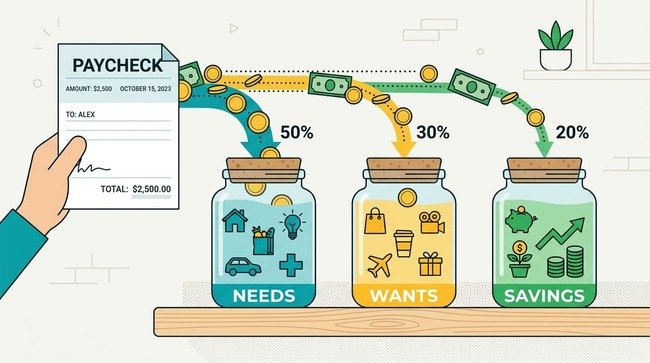
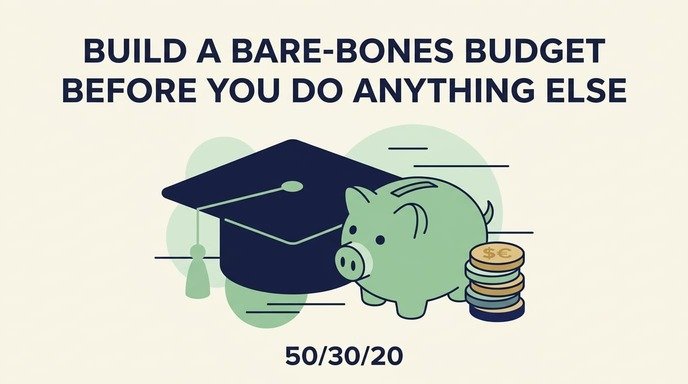
Once you know your actual take-home pay, build your budget from there instead of from your gross salary. A simple starting framework many first-time earners use is the 50/30/20 split: roughly half toward needs, 30% toward wants, and 20% toward savings and debt payoff. It’s not a rigid rule, but it’s a useful default when you don’t yet know your real spending patterns.
For your first month or two, track every expense, even small ones. You’ll likely be surprised by how much goes toward food delivery, subscriptions, or "just this once" purchases that quietly add up. Adjust your budget after that first real month rather than trying to guess it perfectly on day one.
In my own experience, money has always been tied to more than just numbers on a spreadsheet — it affects mood and confidence, too. When I started earning more consistently, I noticed how much calmer and more capable I felt, and how quickly that could flip during a tight month. If you feel a wave of anxiety the first time you check your account balance after rent and bills come out, that’s an extremely common (and rarely talked about) part of starting your financial independence, not a sign you’re doing something wrong.
Say Yes to Your 401(k) Match, Even If Retirement Feels Far Away
If your employer offers a 401(k) match, enrolling early is one of the highest-value moves you can make in your first year of full-time work. According to Fidelity, the most common match formula is a dollar-for-dollar match on the first 3% of your salary you contribute, plus 50 cents on the dollar for the next 2%, which means contributing 5% can effectively net you close to 4% more from your employer. (Fidelity)
That employer contribution is often described as "free money" because you don’t have to do anything extra to earn it beyond contributing enough to get the full match. Even if retirement feels decades away, missing out on a match is money you’re simply leaving on the table every single paycheck.
If you’re unsure how much your company matches, ask HR directly during onboarding. It’s a normal question, not an awkward one.
Start an Emergency Fund, Even If It’s Small
An emergency fund is what keeps a flat tire or an unexpected medical bill from turning into a credit card balance. The Consumer Financial Protection Bureau generally recommends building toward three to six months of essential expenses, though it notes the right amount depends on your specific situation, like job stability and whether you have dependents. (Consumer Financial Protection Bureau)
That target can feel completely out of reach when you’re just starting out, and that’s fine. A recent Bankrate survey found that only 47% of Americans could currently cover a $1,000 emergency using savings alone, so you’re far from alone if you’re starting from zero. (Bankrate)
Instead of trying to hit "six months of expenses" immediately, start with a smaller, specific goal: one month of essential expenses, or even just $500. Automate a small transfer to a separate savings account every payday so it happens before you have a chance to spend it.
Watch Out for Lifestyle Inflation
Lifestyle inflation is the quiet trap where every raise or new job immediately gets absorbed by a nicer apartment, a new car, or upgraded everyday spending. It’s tempting because it happens gradually, one reasonable-sounding purchase at a time, rather than in one obvious decision.
A simple guardrail: whenever your income increases, decide in advance what percentage goes to savings or debt payoff before deciding what to do with the rest. That way your future raises grow your financial position instead of just your monthly expenses.
Be Strategic About Any Existing Debt
If you’re carrying student loans or credit card debt into your first job, don’t ignore it just because a paycheck is now coming in regularly. Check your student loan grace period and repayment terms as soon as you’re hired, since some loans start accruing interest or require payments sooner than people expect.
For credit card debt specifically, focus on paying down the highest-interest balances first while still contributing at least enough to get any 401(k) match your employer offers. Carrying high-interest debt while ignoring free retirement matching dollars is rarely the better trade-off.
Frequently Asked Questions
How much of my first paycheck should I save? There’s no single correct number, but many first-time earners aim for around 15-20% of take-home pay across retirement contributions and general savings, adjusting up or down based on rent, debt, and cost of living.
Should I pay off debt or build an emergency fund first? Most financial educators suggest doing both in parallel at a modest level: contribute enough to get any employer 401(k) match, build a small starter emergency fund of $500-$1,000, and then aggressively pay down high-interest debt before scaling savings further.
Is it normal to feel stressed about money even with a stable job? Yes. Financial stress often has more to do with uncertainty and new responsibility than with the actual size of your paycheck, and it tends to ease as you build systems like a budget and an emergency fund.
When should I start contributing to a 401(k)? As soon as you’re eligible, especially if your employer offers a match. Even a small contribution in your first year builds the habit and takes advantage of compound growth over time.
Getting your first full paycheck is a milestone worth feeling good about. The systems you put in place now, even imperfect ones, tend to matter more than getting every single decision exactly right from day one. If you’re still figuring out the basics of a budget, that’s a natural next step to work through.