You’ve seen the screenshots. Someone’s side hustle "replaced their 9-to-5″ in four months, and now they’re posting from a beach somewhere. Meanwhile, you’re wondering if your side gig will even cover your phone bill this month. Both stories are true — they’re just describing very different people at very different stages.
The Real Numbers: Average vs. Median Side Hustle Income
Here’s where most side hustle articles get a little dishonest: they lead with the average, because the average sounds exciting.
According to LendingTree’s 2026 side hustle survey, side hustlers earn $1,242 a month on average. That’s a solid number. It’s also, for most people, not the number that matters.
The median tells a different story. Bankrate’s side hustle survey found that median side hustle income sits at just $200 a month, and that figure has actually been drifting down rather than up. In other words, half of all side hustlers make less than $200 a month, while a smaller group of high earners pulls the average way up.
Why the gap? Because a handful of people — often those who’ve been at it for a year or more, or who sell a specialized skill — are earning thousands, and that skews the average. Most people are somewhere closer to the median, especially in the first few months.
That’s not meant to discourage you. It’s meant to help you set a goal that’s actually based on reality, instead of the version of reality that gets the most likes.
How Much Time You’re Actually Trading for That Money
Money without a time cost is a different conversation than money with one. So it’s worth asking: how many hours are people actually putting in for these numbers?
Side hustlers report working somewhere in the range of 11 to 16 hours a week on their side income, according to research from Side Hustle Nation. Combined with typical earnings, that works out to roughly $16 to $23 an hour for the average person — a reasonable part-time wage, but not the "quit your job by Friday" math that gets sold online.
That hourly rate, however, swings enormously depending on what you’re actually doing. A few examples:
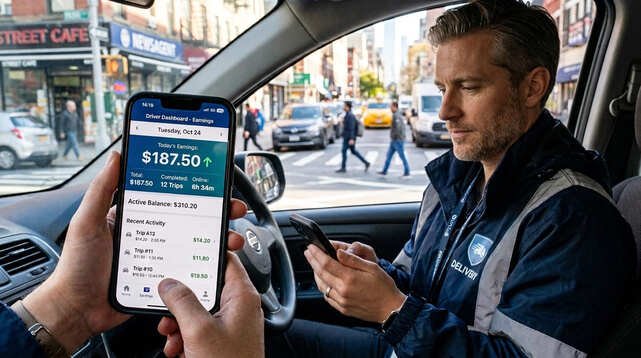
- Delivery and gig driving: after gas, wear on your car, and taxes, most drivers net somewhere around $12–$18 an hour.
- Freelance writing, design, or virtual assistance: commonly $25–$50 an hour once you have a few clients.
- Specialized freelancing — coding, consulting, or technical work: rates frequently land in the $50–$150 an hour range, based on freelance marketplace data from Upwork.
The pattern here isn’t subtle: the side hustles that pay well per hour are almost always the ones where you’re selling a skill, not just your time.
Does the Type of Side Hustle Change What’s Realistic?
Yes, significantly. Earnings also vary by age group in ways that might surprise you. Generational data reported by Bankrate found that millennial side hustlers earn the most on average, at roughly $1,129 a month, followed by Gen Z at $958, Gen X at $751, and baby boomers at $561.
That’s not necessarily about age itself. It likely reflects the kinds of side hustles each generation tends to pick — younger workers lean toward digital, skill-based work like content creation and freelancing, which simply pays more per hour than the gig-driving or resale work that’s more common among older side hustlers.
If you’re choosing between side hustle ideas right now, this is the single most useful takeaway: the format matters as much as the effort. Selling your time at a flat rate has a ceiling. Selling a skill, a system, or a product doesn’t have the same cap.
What Actually Separates the $200-a-Month Side Hustlers From the $2,000-a-Month Ones
This is less about luck than it looks. A few patterns show up again and again among people who move from the median toward the average — or past it.
- They stick with one thing long enough to get good at it. Most side income compounds; it doesn’t arrive on day one.
- They niche down instead of staying general. A freelancer who specializes tends to charge more than one who says "I do a bit of everything."
- They treat it like a small business, not a hobby — tracking what’s working, dropping what isn’t, and reinvesting time into the part that actually pays.
In my own experience, this last point is the one that tripped me up. I once tried to run several side businesses at the same time, thinking more streams meant more security. Instead, none of them got the attention they needed to actually grow, and I ended up further from my goal than if I’d just picked one and given it my full focus. Since then, I’ve learned that one side hustle done well almost always beats three done halfway.
How to Set a Realistic Income Goal for Your Own Side Hustle
Instead of aiming at the average — a number built from people at very different stages — try grounding your goal in your own situation:
- In your first 1–3 months, expect something closer to $100–$400, especially if you’re building an audience, a portfolio, or a client base from zero.
- Past the 6-month mark, consistent effort in one lane typically pushes that into the $500–$1,500 range.
- If your hustle is skill-based and you can raise your rate over time, $2,000+ a month becomes realistic, though it usually takes sustained focus rather than a lucky break.
None of these numbers are guaranteed, and your results will depend on your skill, your market, and how much time you can consistently show up. But they’re a far more useful benchmark than a stranger’s best month on the internet.
FAQ
Is $500 a month from a side hustle considered good? For most people, yes — it’s well above the reported median and represents a meaningful, sustainable amount of extra income without requiring a huge time commitment.
How long does it typically take to earn real money from a side hustle? Most people see modest income in the first one to three months, with earnings typically growing more noticeably after the six-month mark as skills, clients, or an audience build up.
Do side hustles get taxed differently than a regular job? Side hustle income is generally still taxable and often isn’t automatically withheld the way a paycheck is, so it’s worth setting money aside and checking current guidance from a tax professional or the IRS.
Should I run multiple side hustles at once to earn more? Not usually, at least not at first. Splitting your time across several unproven side hustles tends to slow all of them down; most people see faster results by focusing on one until it’s earning consistently.
Once you know roughly what to expect income-wise, the next logical question is how to actually turn a few hours a week into something worth showing up for.